SinoJapaneseWar.com
August 1, 1894 – April 17, 1895
Jiawu Zhanzheng 甲午戰爭 日清戦争 Nisshin senso
The First Sino Japanese War
August 1, 1894 - April 17, 1895
|
|
Overview of the Sino-Japanese War
Battle of Pyongyang Woodblock print by Mizuno Toshikata . The First Sino-Japanese War ( Jiawu Zhanzheng 甲午戰爭 日清戦争 Nisshin senso ), August 1, 1894 – April 17, 1895 was fought between Qing ( 清朝 Qing Chao 1642 - 1912 ) China and Meiji ( Meiji-jidai 1868 - 1912 ) Japan officially from Aug 1, 1894 to April 17, 1895 ( fighting broke out on July 25, 1894 ) over control of Korea, which was a Chinese tribute state . Many foreign observers expected China to win, as its navy was stronger on paper with its ironclad battleships and the Chinese army was assumed to be massive. While China had modernized somewhat under the Self Strengthening Movement, it could not match the rapid progress made in Japan under the Meiji Restoration.
Qing Dynasty flag, known as the Yellow Dragon flag ( 黃龍旗 Huang Long Qi ) adopted in 1889 . It has a five clawed Azure Dragon , a symbol of imperial power , on a field of yellow . The color yellow was associated with the emperor and members of the royal family were the only ones allowed to wear this color . The dragon is chasing a flaming pearl, a symbol for wisdom, enlightenment, good luck and prosperity.
The Rising Sun flag ( 旭日旗 Kyokujitsu-ki ) used by Japanese forces in the war . On May 15, 1870, it was adopted as the war flag of the Imperial Japanese Army, and on October 7, 1889, it was adopted as the naval ensign of the Imperial Japanese Navy. The naval ensign is offset .
Animated map of progress of the Sino Japanese War
Korea 1890s
Treaty of Tientsin , April 18,1885 . Signed between the Meiji period Empire of Japan and Qing Dynasty to try to relieve tension in Korea after the failed Kapsin coup of Dec 4, 1894 in Korea . The Convention effectively eliminated China's claim to exclusive influence over Korea, and made Korea a co-protectorate of both Japan and Qing. The war started in the Seoul area of modern South Korea. Both China and Japan had the right to send troops to Korea under the Tientsin Convention of 1885. A rebellion broke out in Korea in 1894, known as the Tonghak Rebellion. Japan used this as a pretext to try to start a war with China in Korea,which China and Japan had been ruling as a co-protectorate, with China playing the leading role. Soon, both China and Japan had troops in Korea, and this explosive situation soon led to conflict . Japan felt it was strong enough at this point to challenge China in a war over Korea.
Short overview of the Sino Japanese War
Battle of the Yalu
Trailer for 一八九四·甲午大海战 ( 2012 ) 1894 : The Sino-Japanese War After working on the script for two decades with historians, director Feng Xiao Ning brings a major naval battle to the big screen with The Sino Japanese War at Sea 1894. The big-budget war epic chronicles the efforts of the Qing Dynasty to modernize its navy and the important part it played in the first Sino-Japanese War . The film follows the journey of Deng Shichang (played by Lu Yi), who was one of the first naval officers to receive training in modern naval warfare in England. These soldiers also meet Ito Sukeyuki (Xia Yu), who will end up fighting against Deng when war breaks out nearly 20 years later. With a corrupt empress in power and a military with limitless funding, will Deng and the rest of the Chinese fleet succeed in defending Chinese sovereignty?
Scene from Naval Battle of Yellow Sea 1962 After losing a minor battle at Seonghwan near Cheonan, South Korea, the main Chinese force concentrated in Pyongyang and was defeated, despite outnumbering the Japanese. The following naval Battle of the Yalu was one of the first modern naval battles in history with ironclad ships, quick-fire guns and torpedoes used. The Chinese lost five ships and retreated to Port Arthur, then to Wei Hai, never to threaten the Japanese in the Yellow Sea again . After the defeat in Pyongyang, there was no more Chinese resistance in Korea and two Japanese armies invaded Manchuria, with Port Arthur, Newchang ( Yinkou, China ) being taken . While taking Port Arthur, the Japanese found the mutilated remains of Japanese prisoners and went on a frenzy of killing in Port Arthur in which almost all of the remaining Chinese population of the city was massacred, known as the Port Arthur Massacre . The Beiyang Navy base at Wei Hai fell to the Japanese in early 1895 and the ships of the Chinese Beiyang Fleet were sunk or captured, while the Japanese lost no major ships.
Battle of WeiHai
In Manchuria, Qing forces under General Sung Qing battled furiously to recover Hai Cheng, even though the Japanese were outnumbered 60,000 to 25,000, they managed to hold the city inflicting heavy loses. Japan was poised for a two prong attack on Beijing from Manchuria and Shandong , leading the Chinese to seek peace.
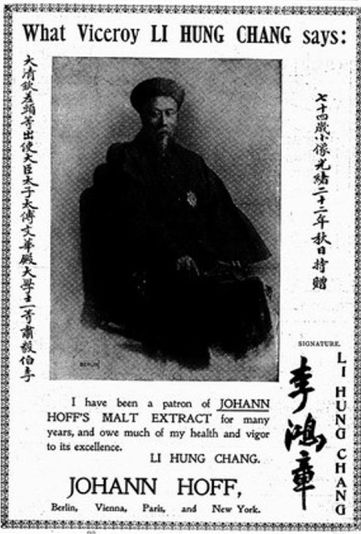
Li Hong-zhang, the viceroy of Chili (Hebei) drilled his armies in western techniques and stressed officer-soldier ties , Confucian values and tried to modernize the Chinese forces against the foreign menace .
The Treaty of Shimonoseki was signed on 17 April 17,1895. China recognized the independence of Korea and ceded the strategic Liaodong Peninsula ( also called the ' Regent's Sword' in many books of the period ) with Port Arthur ( Lüshunkou , Dalian )Taiwan and the Pescadores ( Peng Hu ) Islands to Japan and was to pay an indemnity of 263,176,701 taels of silver (about 150 million U.S.dollars ) , most favored nation trade status and opening of Shashi, Chungking, Suzhou and Hangzhou to Japanese trade. Japanese could move freely in the interior and set up businesses. The Japanese war indemnity and loans to fiance the war of almost 120 million taels to fiance the war were a large drain on the economy .
During the peace negotiations, there was an assassination attempt against Li Hongzhang, the Chinese plenipotentiary and the Japanese emperor Meiji declared an unconditional armistice on March 29, 1895 Japanese lose of face over this led the Japanese to accept more moderate concessions (they had wanted to occupy Shanhaiguan , Taku , and Tien-tsin ( Tianjin ) and some costal forts as well .
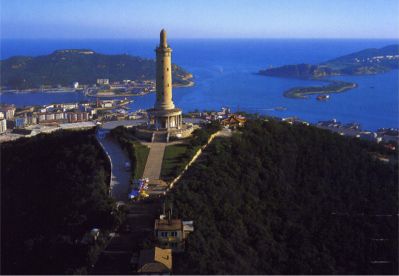
Russo-Japanese War monument at Port Arthur, site of a battle in the Sino-Japanese War as well . Shortly after the treaty was signed, Russia, France and Germany united under the Triple Intervention and threatened war with Japan if it did not withdraw from Port Arthur, which it did in the face of this triple threat. Shortly afterward, Russia occupied Port Arthur .
The major consequences of the war were that Japan was recognized as a rising world power, increased xenophobia in China leading to the Boxer Rebellion in 1899 and Korea becoming a colony of Japan . The success of the armed forces lead to increasing power of the militarists in Japan .
Estimates of Japanese killed very from 800 to almost 14,000 . Cholera killed more Japanese troops than battle, and Japanese troops brought the disease home, which killed and estimated 30,000. Chinese losses are estimated to be 35,000 killed or wounded .
An underwater archeological mission in the Yellow Sea has discovered one of four warships of the Chinese Beiyang Fleet sunk by the Japanese navy during the first Sino-Japanese War120 years ago. The 2,300-tonne warship, “Zhiyuan”, was lost in the battle at the Yellow Sea on September the 17th, 1894.
Map of operations in the Sino-Japanese War . Click to enlarge .
Large 1894 map of the seat of conflict Click for larger image . Books on the Sino Japanese War of 1894 - 1895
The Sino-Japanese War of 1894-1895: Perceptions, Power, and Primacy Arguably the first comprehensive treatment of the subject in English ever, this work provides a political, diplomatic, cultural, and military survey of the dramatic confrontation between Japan and China that overturned the entire balance of power in the Far East .
Sino-Japanese Naval War 1894-1895 Piotr Olender has produced a thorough study of the naval aspects of an overlooked conflict that played an important role in shaping modern China. Some forty years before China and Japan entered into a cataclysmic war that led directly to Pearl Harbor, the government in Tokyo made its ambitions on the Asian continent clear when it challenged the Qing Dynasty. Olender provides an extensively researched, fully illustrated study of clash at sea, including a detailed description of each of the warships of the opposing sides.
Kenkenroku: A Diplomatic Record of the Mutsu Munemitsu has presented a memoir of all the political dealings surrounding this war with startling frankness and openness. He talks about how Japan needed an excuse to go to war with China, and that the Korean crisis was just that. A lively narrative which is essential reading for any historian of this era.
Heroic Japan : a history of the war Eastlake, F. Warrington; Yamada Yoshiaki 1897
The Japan-China War: on the regent's sword : Kinchow, Port Arthur, and Talienwan The regent's sword is an old name for the lower end of the Liaodong Peninsula .
White, Trumbull, 1895
( Yalu ) Ogawa, Kazumasa 1895
Sino-Japanese War Prints 1894-5 The first Sino-Japanese War of 1894-1895 was Japan's first modern war, and their first military action overseas for over 300 years. One notable result of this conflict was a huge burst in popularity for senso-e ("war pictures"), a genre of ukiyo-e which first evolved as a mutation of musha-e ("warrior pictures") with the need in the 1870s to document the contemporary conflicts which had raged in Japan as a result of the Meiji Restoration, in particular the Seinan War of 1877.
Dozens of artists, from the celebrated to the obscure, added to the mass of images which circulated as the Sino-Japanese War progressed (an estimated 3,000 prints were created in just 10 months). Most of the scenes depicted were based on news reports sent back from the front, with artists rushing to replicate events as quickly as possible. The triptych, with its almost cinematic visual scope, was the preferred format for depicting such scenes of turmoil and carnage. Whilst there is a huge range in quality between the prints made by various artists, the very best senso-e of the Sino-Japnese War remain among the finest in ukiyo-e, providing a bold, if brief, resurrection for an art form which was in danger of dying out due to the advent of new imaging technologies.
Massacres In Manchuria features over 200 rare and exceptional Japanese woodblock prints of war. The artists featured in the book include Kiyochika, Gekko, Toshihide, Toshikata, Nobukazu, Chikanobu, Ginko, and numerous others - a list of many of the most outstanding ukiyo-e artists of the late Meiji period, each of whom used their immense artistic talent and imagination to brilliantly illuminate contemporary conflict as it unfurled.
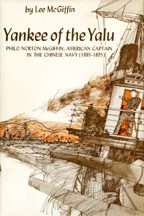
Story of the American naval adviser Philo McGiffin ( 1860 -1897 ) in the Qing navy . He serveg as an executive officer aboard the Chinese battleship Chen Yuen during the Battle of Yalu River .
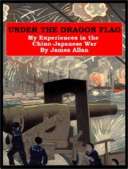
The adventures of James Allan, who smuggled arms for the Chinese and witnessed the fall of Port Arthur. Read Under the Dragon Flag online .
Index
Causes of the Sino Japanese War &The Tonghak Rebellion
Comparison of the Japanese and Chinese Forces
Battle of Pung-do sinking of the Kowshing - July 24, 1894
1894 - Formal Declarations of War Aug 1, 1894
July 29, 1894
Sept 15, 1894
Sept 17, 1894
Oct 24, 1894
Battle of Port Arthur - Port Arthur Massacre Nov 21, 1894
Jan 20-Feb12, 1895
Manchuria - Battle of Newchang Mar 4, 1895
March 24-29
April 17, 1895
Letters between Admiral Ito to Admiral Ding
|
|
||
|
|
|
Next: |
|
|
© Thomas Zimmerman 2008